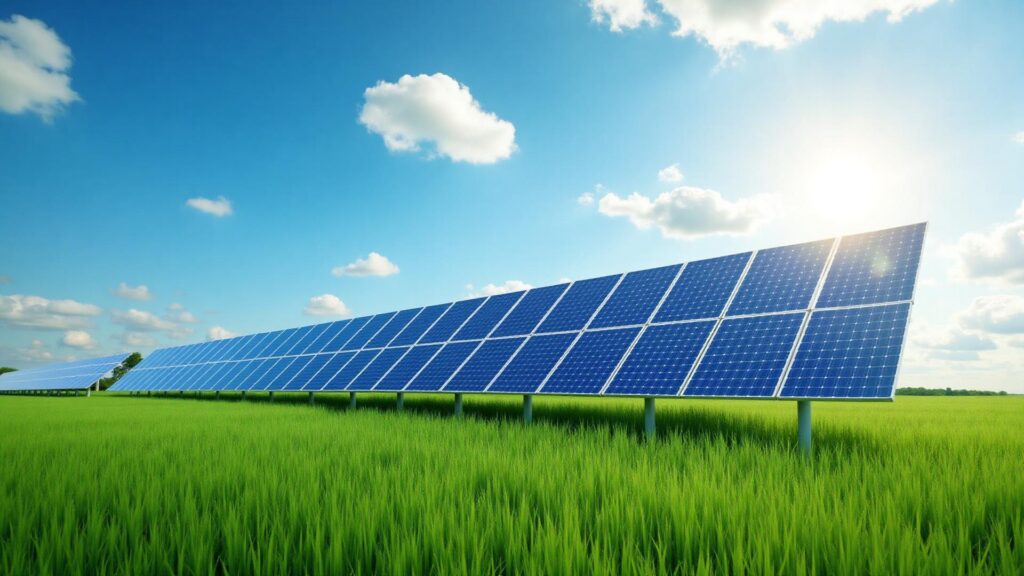
Types of solar panels
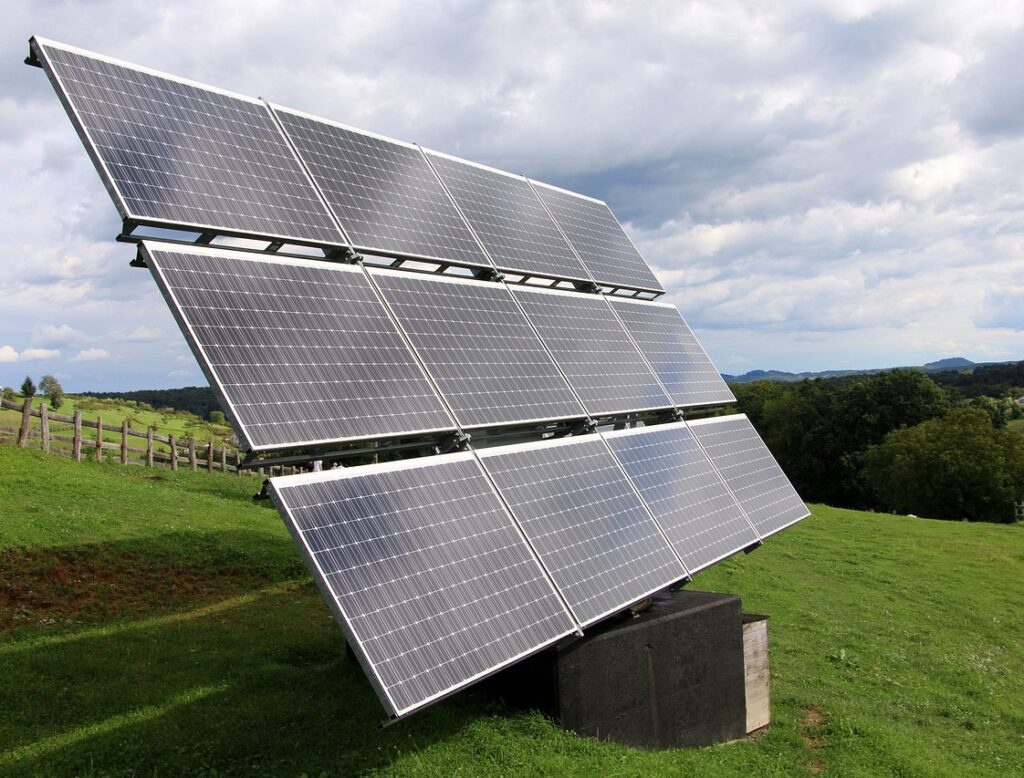
Monocrystalline: Made from a single crystal of silicon, these panels are highly efficient and are the most expensive type.
Solar System Types
Hybrid: These systems combine on-grid and off-grid features, incorporating both grid connectivity and battery storage. They provide backup power during outages and offer the ability to store energy, adding complexity and cost.
Types of installations
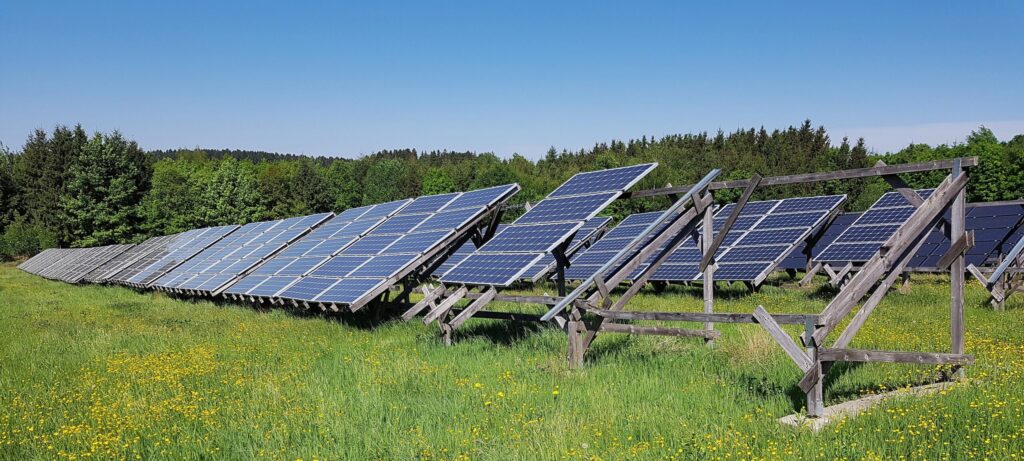
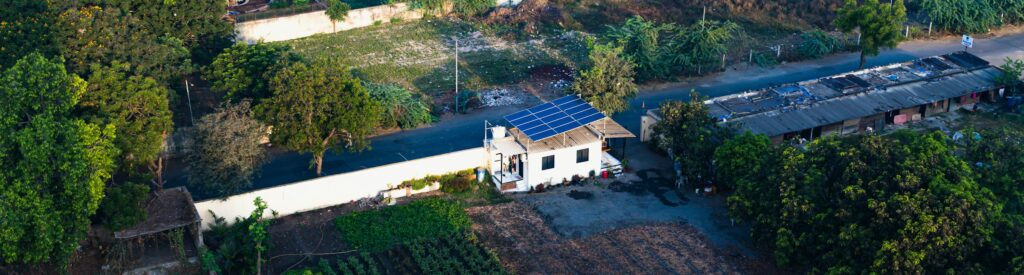
Commercial: Larger than residential systems, with panels installed on large, flat commercial rooftops, carports, or on the ground. The focus is more on energy production than aesthetics.
Project summary
Capacity : 1 kilowatt (kW)
Suitability : A 1kW system is suitable for small households, such as 2- to 3-BHK homes, with modest energy requirements.
Main components
Solar panels : Approximately 2 to 3 high-efficiency monocrystalline panels are needed to achieve a 1kW capacity.
Inverter : A 1 kVA MPPT-based solar inverter is typically used.
Battery : An off-grid system requires two 150 Ah (C10) tubular solar batteries to provide backup power.
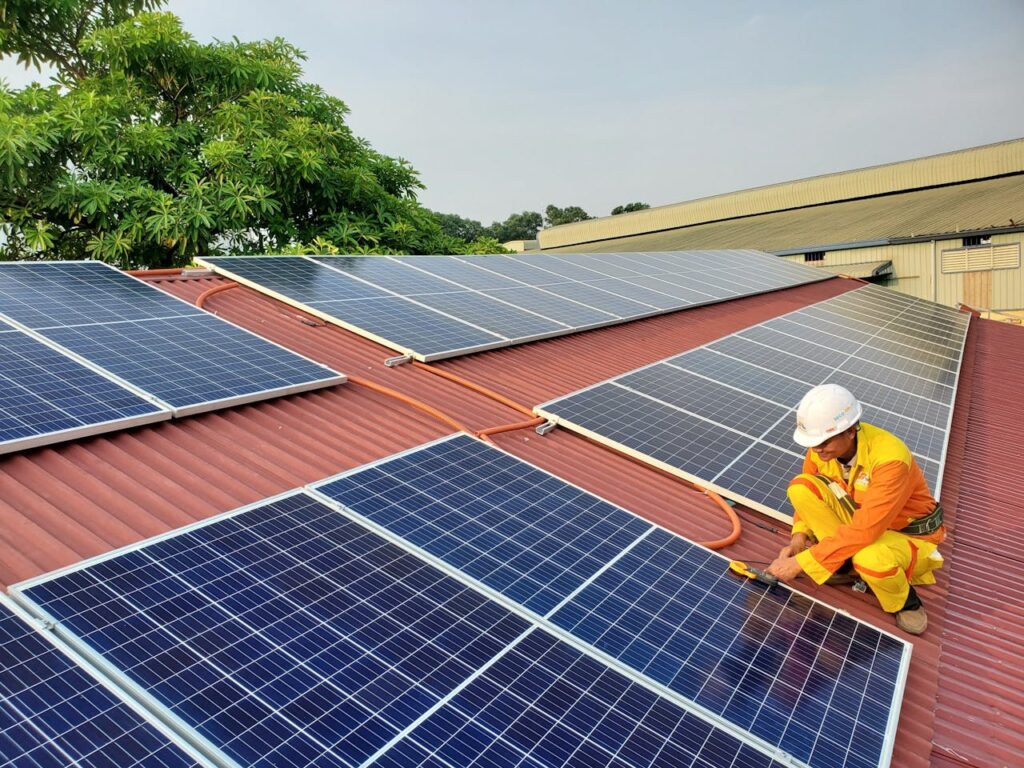
Mounting structure : This is a frame used to mount the panels securely on the roof or ground.
Mounting structure : This is a frame used to mount the panels securely on the roof or ground.
Balance of system : Includes all the necessary cables, fasteners, connectors, and earthing equipment.
Space requirement
Total area : The system requires approximately 80 to 100 square feet (8 to 10 square meters) of shadow-free, south-facing space for optimal performance.
Energy generation
Daily output : The system can generate an average of 4 to 5 units (kWh) of electricity per day.
Monthly output : This amounts to about 120 to 150 units per month.
Annual output : The average yearly generation is around 1,440 to 1,500 units.
Estimated cost and subsidy
Estimated Cost : The cost of a 1kW solar system in India generally ranges from ₹70,000 to ₹85,000 before subsidy.
Government Subsidy : Under the PM Surya Ghar: Muft Bijli Yojana, residential rooftop solar systems receive a 60% subsidy for the first 2 kW. For a 1kW system, this means you can receive a subsidy of ₹30,000, significantly lowering your initial investment.
Appliances Supported
A 1kW system can power basic home appliances, but it is not sufficient for heavy-duty appliances. A typical 1kW setup can run:
Fans
LED lights
A television
A small refrigerator
Laptops and mobile charging